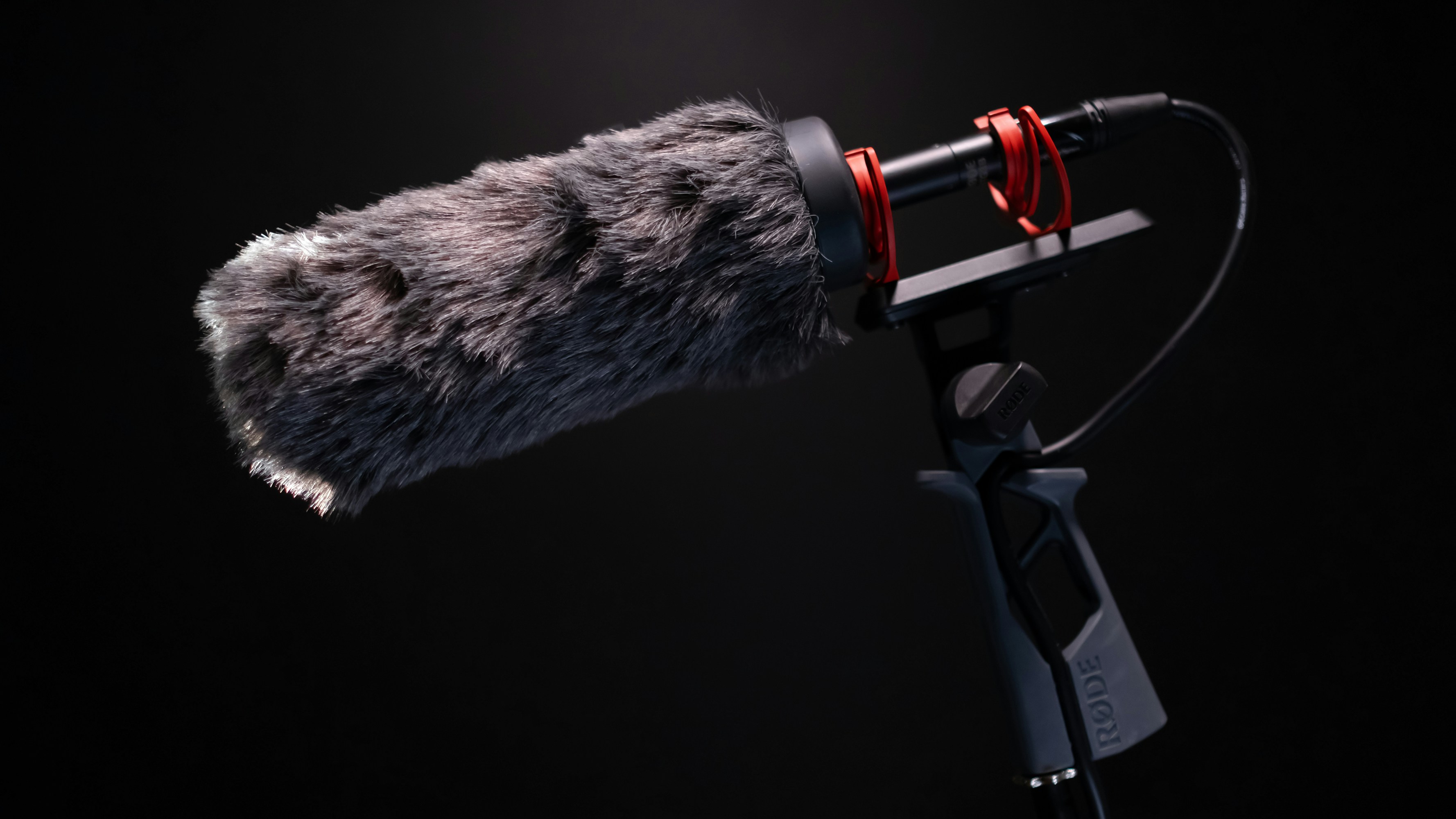
A shotgun microphone is a directional microphone designed to favor sound arriving from the direction it faces. Its long interference tube uses slots along the sides to help reduce certain sounds reaching the capsule from off-axis angles. This can make a speaker’s voice more prominent relative to some surrounding noise, which is useful for interviews, film scenes, and creator videos. Cleaner dialogue is easier to understand and can make a production feel more polished, even when the camera setup is simple.
Directionality has limits. A shotgun microphone does not zoom in on distant sound, nor does it remove every noise behind or beside a subject. Its effectiveness depends on the microphone’s particular pickup pattern, the distance to the speaker, room acoustics, and how the microphone is aimed and positioned. Moving the mic closer generally improves the balance of direct voice against room sound and background noise. A mic mounted on the camera may be convenient, but it is often several feet from the speaker. Placing a shotgun mic just outside the frame, aimed toward the speaker and kept as close as practical, usually captures fuller, clearer dialogue.
For video creators, this distinction can matter more than the microphone’s price or specifications. On-camera placement can work for spontaneous footage or scenes where a boom operator is not available, but it may record more reverberation and ambient sound because of the greater distance. Close placement can also make small changes in a speaker’s movement more noticeable, so consistent positioning and monitoring remain important. A directional mic is a useful tool, not a substitute for thoughtful recording practice.
Shotgun microphones are not always the best choice indoors. In a reflective room, sound bouncing off hard walls, floors, or ceilings can interact with the microphone’s directional design and produce coloration or an uneven tone. Treating the room, changing the microphone position, or choosing another microphone type may deliver better results. Careful placement, appropriate gain, and attention to the environment are still essential; no microphone can compensate fully for poor technique or an unsuitable recording space.
Start by deciding where the microphone will sit and how you will record. A camera-mounted model is convenient for run-and-gun YouTube videos, interviews, and situations where setup time is limited. It captures sound from the camera’s position, so it may be less effective when the subject is several metres away. For filmmaking, a compact boom microphone can be positioned closer to the person speaking, often producing clearer dialogue while keeping the microphone outside the frame. Consider the microphone’s length, weight, and balance: a longer model may offer useful reach but can be awkward on a small camera or in tight spaces.
Compare sound specifications with real recording conditions in mind. Self-noise matters when recording quiet dialogue or ambience, while sensitivity affects how strongly the microphone responds to sound. Neither figure alone guarantees better results. Listen for off-axis sound quality, too: voices and other sounds entering from the sides should remain reasonably natural, especially when subjects move or the microphone cannot be aimed precisely. Wind protection is essential outdoors. Check whether the package includes a foam windshield, furry cover, or both, and whether those accessories are suitable for the conditions you expect to encounter.
Next, confirm that the output and power match your equipment. A 3.5 mm connection is common on cameras and compact recorders, whereas XLR is standard on many professional rigs and offers a secure connection, balanced signal, and compatibility with more advanced audio equipment. XLR microphones require an XLR input, or a suitable adapter or interface; an adapter alone may not provide every feature of a dedicated input. Microphones may use plug-in power from a camera, 48-volt phantom power from a recorder or mixer, or internal batteries. Verify compatibility with your camera, recorder, or wireless system before buying. Finally, assess the whole kit: shock mount, cables, wind protection, battery access, and durability all affect usability and total cost. A low-priced microphone may need costly extras, while a complete, robust package can offer better value over time.
Choosing a shotgun microphone is easier when you match it to the camera, recording workflow, and typical shooting distance rather than looking for one universal winner. The Rode VideoMic NTG suits creators who want a versatile on-camera microphone for YouTube, interviews, and lightweight video work. Its flexible output options and useful controls can simplify connection to cameras and compatible recording devices. The trade-off is that its feature set may be more than a simple setup needs, and users should check connector compatibility and power requirements for their equipment before buying.
The compact Deity V-Mic D3 Pro is another camera-mic option, aimed at creators who value portability and adjustable gain. Its straightforward form makes it practical for run-and-gun filming, while its broad creator appeal reflects its usefulness across common camera and mobile workflows. Confirm that the included or selected cable matches the specific device: camera, phone, and computer connections are not always interchangeable. For a longer, more production-oriented microphone, the Sennheiser MKE 600 offers XLR capability and can suit both camera-mounted use and more demanding kits. Its size and XLR workflow may be less convenient for minimal setups, so verify available inputs and powering arrangements.
Filmmakers building an XLR boom setup may consider the lightweight Rode NTG5. It is designed for professional production workflows, where a boom operator and external recorder or mixer can provide more control than an on-camera arrangement. That approach requires compatible XLR connections and suitable supporting equipment. The Audio-Technica AT875R is a shorter, relatively compact XLR shotgun worth comparing for dialogue work, particularly when a smaller microphone is desirable; confirm that its pickup characteristics and mounting options fit the intended scenes. Prices, bundles, and specifications can change, so check current manufacturer information before purchase. Where possible, compare real-world sample recordings made at similar distances, in similar rooms, and with comparable background noise. Such listening tests reveal more about practical suitability than model names or specifications alone.
For solo creators who move between locations and operate the camera themselves, a compact camera-mounted shotgun is often the most practical choice. It stays ready to record, adds little setup time, and keeps the package light. Choose a model with a secure shock mount and windscreen, while checking that its output and power requirements match the camera.
For controlled dialogue scenes, place a shotgun on a boom just above or below the frame, aimed toward the speaker. This position usually captures clearer, more natural dialogue than mounting the microphone on the camera several feet away. Keep it as close as framing permits, and use a boom operator or stand to maintain consistent placement during a take.
Indoor interviews require attention to the room as well as the microphone. Hard walls, windows, and floors can reflect sound, making a shotgun recording hollow or uneven. Test the space before choosing equipment. If reflections remain distracting, a small-diaphragm condenser microphone or a lavalier may provide more consistent results, depending on the speaker’s movement and the desired sound.
Use a repeatable recording routine: aim the microphone toward the speaker’s mouth and move it as close as framing allows. Fit a shock mount to reduce handling and stand noise, and add suitable wind protection outdoors. Monitor through headphones while recording, set input levels with enough headroom to avoid clipping, and record a short test before filming. Listen back for room echo, traffic, clothing noise, or other problems. Capture room tone at each location, and record a backup track when the equipment allows.
Match the microphone class to four practical factors: budget, camera or XLR compatibility, filming environment, and placement. A compact camera-mounted model suits mobile solo work; a boom-ready shotgun is a stronger fit for controlled scenes. For reflective interiors, compare alternatives before committing. Prioritize compatibility and usable wind protection over extra features, and select a microphone whose pattern and reach suit the distance at which it will actually be used.